
Taxes touch every part of your money life. They shape your paycheck, your savings, your investments, and your plans for the future. When taxes and financial planning work as one, you get clarity.
A strong plan blends a tax lens with every money choice. It is not a once-a-year task. It is a steady process through each season. Your plan should guide your cash flow, debt, benefits, and benefits at work. It should shape your investment mix and your retirement savings. It should also cover your business, your family, and your legacy.
Our perspective comes from hands-on work with real people and real firms. This post maps that ground for you. It shows how tax and financial planning services work, what to expect, and how to get the most from them.
Team Rocket Tax- Contact our team for more information
Why taxes and financial planning should work together
Tax is not a separate lane. It runs through all your money roads. Each choice has a tax cost or a tax edge. When you plan in one view, you act with full facts. You align steps for both short and long gain.
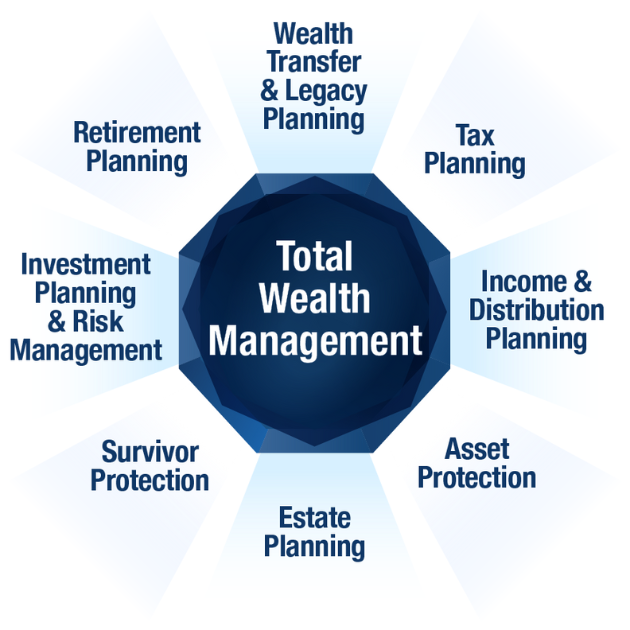
Most people only think about tax at filing time. That is too late. By then, options have closed. Smart tax planning is year-round. It tracks changes in income, markets, and law. It uses simple moves to shift money to better buckets. When you link taxes to your plan, you can raise after-tax returns, reduce risk, and hit goals on time.
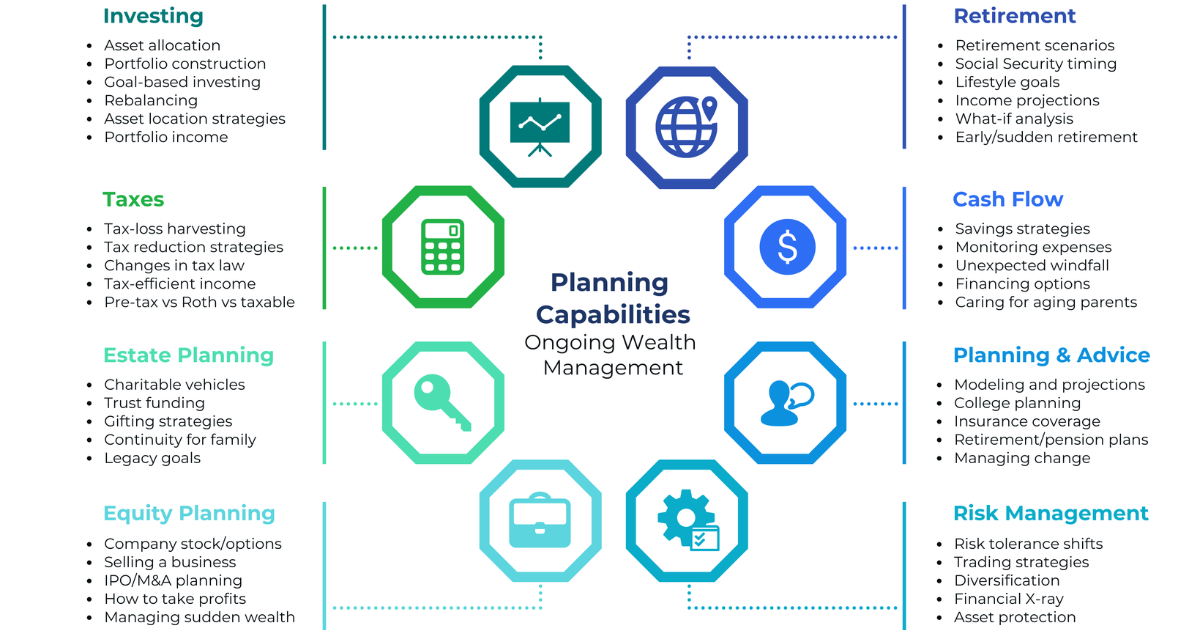
What tax and financial planning services cover
Tax-aware planning spans many areas. Your needs may change with your stage of life. But the core parts stay the same. A good service ties them into one clear path.
Tax planning, preparation, and projections
Tax planning starts with what you can control.
- Use safe harbor rules to avoid penalties. Check IRS Pub 505 for details.
- Run mid-year projections. Adjust before December 31.
- Coordinate with tax prep. Planning and filing should share data.
- Use credits. Think Child Tax Credit, Saver’s Credit, and clean energy credits.
- Track basis and holding periods. That helps with capital gains rates.
- Watch AMT, NIIT, and phaseouts. These can change your marginal tax cliff.
Cash flow, savings rate, and debt strategy
Taxes affect your take-home pay and loan costs. A plan sets a target savings rate. It picks the right account types. It times debt payoff for maximum net benefit.
- Boost net pay by right-sizing withholding.
- Use pre-tax accounts to reduce taxable income, when it fits your bracket.
- Or use Roth when your future rate may be higher.
- Refinance or pay down high-interest debt first.
- Use HSA for triple tax benefits if you have a HDHP.
Retirement plans and lifetime tax balance
Retirement is a tax puzzle.
- Use employer plans: 401(k), 403(b), 457(b). Consider match first.
- Use IRAs. Roth IRAs are tools for tax-free growth and flexible access.
- In low-income years, consider Roth conversions.
- Bridge the gap before RMD age with planned withdrawals.
- Coordinate Social Security timing with tax bands.
- Mind IRMAA thresholds to avoid higher Medicare premiums.
Investment strategy and tax efficiency
Your returns can leak to taxes. You can cut that leak with smart location and timing. Tax-wise investing helps you keep more of each dollar earned.
- Place tax-inefficient assets in tax-deferred accounts.
- Put tax-efficient index funds in taxable accounts.
- Use municipal bonds in high-tax states if you are in a high bracket.
- Harvest losses to offset gains. Avoid wash sales.
- Defer gains when it fits, but do not let tax tail wag the dog.
- Track qualified dividends for lower rates.
- Use direct indexing if your tax situation calls for it.
Business owner planning and entity design
Business owners face special tax choices. Entity type, payroll, benefits, and timing all matter. The plan blends tax savings with risk and growth goals.
- Pick an entity: sole prop, LLC, S corp, or C corp.
- Use the QBI deduction if you qualify.
- Pay a reasonable wage in an S corp.
- Set up a Solo 401(k), SEP IRA, or cash balance plan.
- Track accountable plans for business expenses.
- Pre-plan for estimated taxes and payroll taxes.
- Use the home office deduction if you qualify.
Equity compensation and stock options
Stock grants can create surprise taxes. RSUs, ISOs, NSOs, and ESPPs each work in a unique way. Timing and choice drive your tax cost.
- For RSUs, plan for vesting and withholding gaps.
- For ISOs, watch AMT triggers at exercise.
- For NSOs, exercise adds to W‑2 wages.
- For ESPP, track qualified vs. disqualified sales.
- Use a sell-to-cover strategy to handle taxes when cash is tight.
- Diversify to manage risk tied to your employer.
Estate, gifts, and legacy
Estate plans are tax plans too. You want your assets to go where you intend, with the least friction and tax. Small steps today can save large sums later.
- Keep wills, powers of attorney, and health directives current.
- Title accounts right. Use beneficiary designations and TOD/POD.
- Use the annual gift tax exclusion when helpful.
- Consider trusts for control, tax planning, or special needs.
- Plan for state estate or inheritance taxes if they apply.
- Align your legacy with your values and your heirs’ needs.
Charitable giving
Giving can do good and lower taxes. The right tool depends on your goals, the asset, and timing.
- Use donor-advised funds (DAFs) for bunching.
- Give appreciated stock to avoid capital gains.
- Consider QCDs after age 70½ to offset RMD income.
- Track AGI limits for cash vs. non-cash gifts.
- Get proper receipts and appraisals when needed.
Education savings
College costs rise fast. Tax-advantaged accounts help. You also get state tax breaks in some places.
- Use 529 plans for tax-free qualified education growth.
- Check if your state offers 529 tax deductions or credits.
- Consider a Coverdell ESA for K–12 in specific cases.
- Coordinate 529 with AOTC and LLC credits.
- Beware of double dipping with the same expenses.
Insurance and tax edges
Insurance protects your plan. Policies also have tax rules. Knowing them helps you pick the right coverage and avoid traps.
- Life insurance death benefits are usually income-tax free.
- HSA distributions are tax-free for qualified medical expenses.
- LTC insurance can have tax-favored premiums within limits.
- Disability benefits tax rules depend on who pays the premium.
- Avoid mixing investment aims with insurance unless needs fit.
Real estate and rental property
Property has rich tax rules. Records and strategy matter. With care, you can raise after-tax income and defer gains.
- Track basis, improvements, and depreciation.
- Use passive loss rules and real estate pro status with care.
- Consider a 1031 exchange for deferral, if you qualify.
- Watch state and local taxes on property and transfers.
- Plan for depreciation recapture when you sell.
A simple year-round tax calendar
A steady cadence beats a last-minute rush. Use a simple calendar. Tie it to your goals and cash flow. Update as life changes.
- January–March
- Gather prior-year forms and records.
- Fund IRAs for last year by the deadline.
- Adjust withholding and benefits for the new year.
- April–June
- File taxes or extend on time.
- Make Q2 estimated taxes if needed.
- Rebalance investments. Harvest losses if markets fall.
- July–September
- Mid-year tax projection. Recheck savings rate.
- Review 529 and HSA funding.
- Plan equity comp exercises ahead of year-end.
- October–December
- Year-end tax moves: Roth conversions, DAF gifts, RMDs.
- Capital gains review. TLH where it fits.
- Finalize bonuses, payroll, and benefits elections.
Tools, reports, and workflows you should expect
Quality tax and financial planning has structure. Good tools support clear steps. You should see both the big picture and line-item detail.
- Data flows
- Secure client vault for docs and tax returns.
- Linked accounts for real-time cash flow and holdings.
- Clear intake forms for goals and constraints.
- Key reports
- Tax projection with marginal rate map and planning notes.
- Retirement readiness report with scenario analysis.
- Investment tax report: location, gains, dividends, and loss lots.
- Equity comp tracker for vesting and exercise windows.
- Estate snapshot with titling and beneficiary checks.
- Workflows
- Annual plan update with quarterly touchpoints.
- Standing tax calendar tasks.
- Playbooks for Roth conversions, TLH, QCDs, and 529 funding.
- CPA–planner sync meetings before key deadlines.
Explore our Tax Preparation approach at https://teamrockettax.com
Common mistakes that raise your tax bill
Many tax hits come from simple errors. The good news is that they are easy to fix. You can avoid them with a clear process.
- Waiting until filing time to plan.
- Ignoring tax brackets and phaseouts.
- Forgetting to adjust for one-time events.
- Missing RMDs or Q4 estimates.
- Letting RSUs vest without a cash plan for tax.
- Holding funds in the wrong account type.
- Focusing on pre-tax savings only, no Roth mix.
- Not tracking capital loss carryforwards.
- Letting withholdings drift after a job change.
How to choose a tax-smart planning team
Not all advisors plan with taxes. You should look for a team with deep tax skill and a fiduciary duty. Ask the right questions and check their process.
- Credentials and scope
- Do they have CPAs, EAs, or tax attorneys on staff or on call?
- Are planners CFP professionals?
- Do they give year-round advice, not just filing?
- Process and tools
- Do they run tax projections before big moves?
- Do they model Roth conversions and tax-efficient withdrawals?
- Do they integrate equity comp and business planning?
- Fees and alignment
- Are they fee-only or do they sell products?
- Can they show tax alpha from past case work?
- Do they put your interests first as a fiduciary?
Case studies: how integrated planning adds value
Real stories show the power of tax-aware planning. These cases are simple and based on common facts. Your case will differ. But the ideas carry over.
- Case 1: Mid-career couple with RSUs
- Mia and Dan earn $300,000 combined. Dan has RSUs that vest each quarter. Withholding on RSUs is at a flat rate that is too low for their bracket. They faced a large bill at filing each year.
- Plan: We ran a mid-year projection. We raised Dan’s paycheck withholding to match their true bracket. We set a sell-to-cover rule at each vest. We used losses in a taxable account to offset gains.
- Result: No year-end surprise. After-tax cash flow was stable. They harvested $8,000 in losses in a down market, which offset gains from rebalancing and RSU sales.
- Case 2: Roth conversion in a gap year
- Leah retired at 60. She had low income before Social Security and RMDs. Her pre-tax accounts were large and would cause high RMDs at 73.
- Plan: We filled the 22% bracket with Roth conversions each year until age 70. We kept MAGI below IRMAA tiers. We used QCDs after 70½ to lower future taxable income.
- Result: Lower lifetime taxes. Smaller RMDs. A larger Roth bucket for tax-free spending and heirs.
- Case 3: Business owner S corp strategy
- Sam runs a consulting firm. Net profit is $250,000. He was a sole prop and paid self-employment tax on all income.
- Plan: He elected S corp status. He paid a reasonable wage based on market data. The rest came as distributions. We set a Solo 401(k) and a defined benefit plan. We added an accountable plan.
- Result: Lower self-employment tax on the distribution share. Large pre-tax savings. Clear records for audit defense.
- Case 4: Charitable bunching with a DAF
- Priya gives $10,000 each year. She had a big income year due to a bonus and stock sale.
- Plan: She donated $50,000 of appreciated stock to a donor-advised fund in one year. She itemized that year and took the standard deduction in the next four years. She granted out to charities each year from the DAF.
- Result: Avoided capital gains on the donated stock. Increased deduction value in the high-income year. Kept a steady giving plan.
- Case 5: Tax location boost
- A family had $1.2 million across a taxable account, a Roth IRA, and a 401(k). The taxable account held high-turnover funds that threw off gains.
- Plan: We moved bonds and REITs into tax-deferred. We kept broad index equity in taxable. We placed growth assets in Roth. We used TLH rules and avoided wash sales.
- Result: Cut annual tax drag by 0.5%. Over ten years, the impact was significant.
Compliance, ethics, and scope
Tax and financial planning cross lines of regulation. Your team should be open on what they can and cannot do. They should act under a fiduciary duty and with clear standards.
- Fiduciary standard means putting your interests first.
- Fee transparency helps you judge value.
- CPAs follow professional codes and CPE rules.
- Planners should not give legal advice beyond their scope.
- Your plan should clear conflict checks for products or referrals.
- Written advice should cite sources and assumptions.
Pricing models and value in tax-aware planning
You should know how fees work. You should also see value in dollars and peace of mind. Good planning pays for itself over time by avoiding errors and surfacing clear tax alpha.
- Common fee models
- Flat annual retainer for planning and tax services.
- Assets under management with planning included.
- Hourly or project-based fees for specific work.
- Tax prep fees by form complexity.
- Value drivers
- Bracket management and Roth conversions.
- Smart asset location and TLH.
- Entity design for business owners.
- Equity comp timing and cash planning.
- Risk reduction through better records and process.
What a strong firm does to unify tax and planning
Integrated teams break silos. They run one plan with shared data. Your money life feels simple and in sync. Here is what that looks like when done well.
- One intake, one vault, one shared view of you.
- Quarterly syncs that align taxes, cash, and investments.
- CPAs and planners sit in on key meetings together.
- Scenarios are built and updated before big moves.
- Filing supports the plan, and the plan supports filing.
- Clear notes in plain language, with steps and dates.
Building your tax-smart plan: a step-by-step guide
You can start small. You can build a full plan over time. Follow a simple set of steps. Keep momentum. Small wins stack up.
- Gather documents
- Last two years of tax returns.
- Recent pay stubs and benefits choices.
- Investment statements with unrealized gains and lots.
- Equity comp grant and vest schedules.
- Insurance policies and estate documents.
- Map your baseline
- Tax projection for the current year.
- Marginal rate and phaseout points.
- Savings rate and net cash flow.
- Asset location and estimated tax drag.
- Set goals and guardrails
- Target retirement age and spending.
- Bracket guardrails for Roth and conversions.
- Cash reserve size and debt payoff plan.
- Risk capacity and tolerance.
- Draft key moves
- Which accounts to fund first and how much.
- Roth vs. pre-tax split for new savings.
- TLH triggers and trade bands.
- Charitable strategy and timing.
- Equity comp actions and backup plans.
- Build a calendar
- Quarterly reviews and tax checks.
- Filing and estimate dates.
- Rebalance windows.
- Year-end tasks.
- Track and refine
- Update after life events.
- Adjust for new tax laws.
- Review results each year.
- Keep a one-page summary for quick reference.
Special situations worth extra attention
Some events have outsized tax effects. Plan for them in advance. A little prep can save a lot.
- Selling a business
- Structure matters: asset vs. stock sale.
- Consider installment sales and QSBS when possible.
- Coordinate with estate and charitable plans.
- Realizing a large capital gain
- Explore gain deferral or offset with harvested losses.
- Time the sale across years if feasible.
- Moving states
- Different tax rates and rules can shift your plan.
- Watch domicile and residency tests.
- Inheritance
- Basis step-up rules may allow tax-smart repositioning.
- Review titling and beneficiary updates.
- Early retirement
- Manage sequence risk and Roth conversions in the gap years.
- Consider ACA premium credits and MAGI limits.
- Divorce
- Taxes on alimony and property transfers vary.
- Update beneficiaries and titles right away.
Tax law changes: build flexibility into your plan
Tax rules change. Your plan should flex with them. Focus on choices that work under many sets of rules.
- Favor options that can be undone or adjusted.
- Use ranges rather than single targets for brackets.
- Keep cash buffers to handle surprises.
- Document your plan so you can pivot fast.
- Track bills in Congress and state updates that affect you.
Technology that improves outcomes and clarity
Smart tech does not replace advice. It makes it better. It cuts errors and creates more time for judgment and planning.
- Secure client portal with e-sign and e-delivery.
- Data feeds from payroll, custodians, and tax software.
- Scenario tools for Roth, TLH, and withdrawal planning.
- Document search for cost basis and lot history.
- Alerts for RMDs, vesting, and estimate deadlines.
Measuring success: beyond refunds and market returns
Refunds feel good. But they are not the whole story. Success is a lower lifetime tax rate and goal alignment. It is also less stress.
- Track effective and marginal tax rates over time.
- Measure tax drag on taxable investments.
- Monitor realized gains and loss carryforwards.
- Record tax alpha from key strategies.
- Check progress toward your goal funding level.
- Use plain-English reports that tie actions to outcomes.
Frequently asked questions
Q: Is tax planning only for high earners?
A: No. Many gains are simple and help any income level. The right withholding, using credits, and saving in the right accounts can help everyone.
Q: Should I always choose pre-tax over Roth?
A: Not always. It depends on your current and future tax rates. A mix can hedge risk. Roth can shine in low-income years and for long growth windows.
Q: Do I need both a CPA and a financial planner?
A: Many people benefit from both. A CPA focuses on tax accuracy and strategy. A planner links tax to goals, investments, and risk. The best case is when they work as one team.
Q: How often should I do a tax projection?
A: At least once mid-year and again before year-end. Also after large changes like a new job, a vesting event, or a property sale.
Q: How do Roth conversions affect Medicare premiums?
A: Conversions raise MAGI. Higher MAGI can trigger IRMAA surcharges two years later. Plan conversions within IRMAA tiers when possible.
Q: What is tax-loss harvesting and is it always good?
A: TLH sells losers to offset gains and up to $3,000 of income. It can add value, but watch wash sale rules and future tax rates. Do not let taxes sway your long-term asset mix.
Q: How do donor-advised funds work?
A: You donate to the fund and get a deduction that year. The fund then grants out to charities over time. It works well for bunching gifts.
Q: What are common small business tax wins?
A: Picking the right entity, using retirement plans, paying a reasonable wage in an S corp, and keeping tight books. Also plan for estimates to avoid penalties.
Q: Are 529 plans only for college?
A: They are mainly for college, but some states allow K–12 tuition up to limits. Rules vary, so check your state.
Q: Can I do my own tax planning?
A: You can do a lot on your own with good tools and time. Complex cases like equity comp, business sales, or multi-state filings often benefit from professional help.
Conclusion
Taxes are woven into every money move. When you link tax to your financial plan, you see the full field. Start with a clear snapshot and a simple calendar. Make a few high-impact moves this year. Keep going. With a steady path and a capable team, you can keep more, give more, and reach your goals with confidence.
Read More:
Business Tax Preparation in Orlando
Business Tax Preparation