Tax season always feels like a pop quiz I did not study for. When I searched Where to File Taxes in Orlando: CPA vs DIY Filing Options, I just wanted a clear and simple answer. I compared filing my own income tax return using tools from the Internal Revenue Service and IRS Free File with hiring a Certified Public Accountant (CPA) for better tax planning and compliance. In this guide, I will walk you through CPA vs DIY filing options taxes, break down real costs, and help you pick the best way to file with less stress and more confidence.
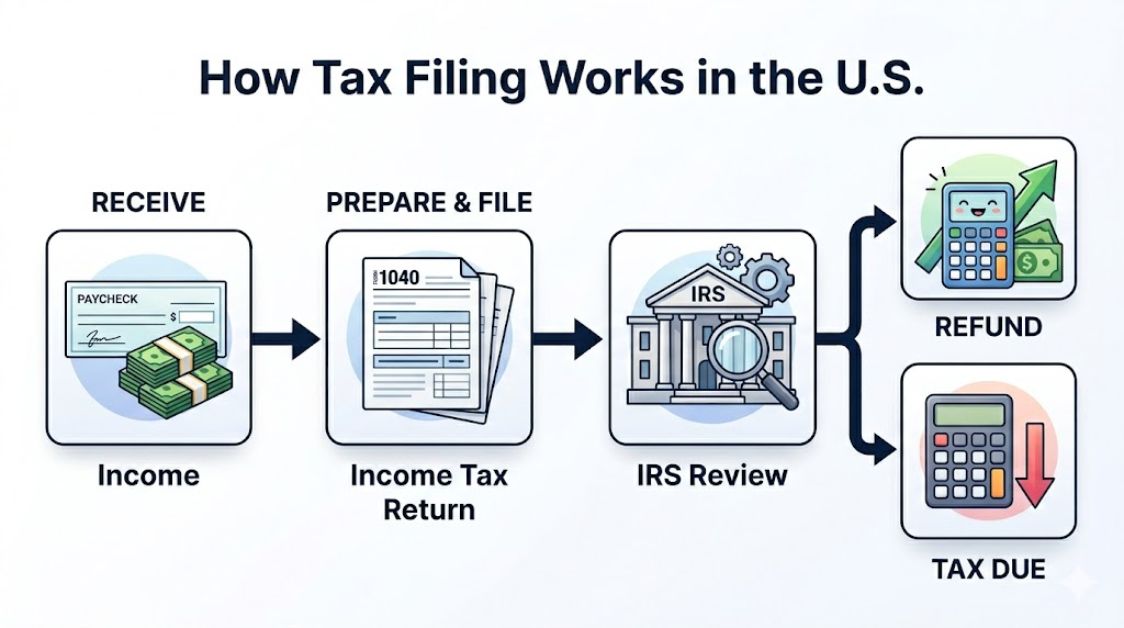
Understanding the Tax Filing Process in the United States
What Is an Income Tax Return?
An income tax return is simply a report you send each year to the Internal Revenue Service showing how much money you made and how much tax you paid. I remember filing my first return and feeling lost, like reading instructions for furniture with no pictures. You list your income, claim credits or deductions, and find out if you get money back or owe more.
Short answer: an income tax return tells the IRS if you paid the right tax.
The goal is tax compliance, not stress. The IRS uses your return to check accuracy and keep records clean. If numbers match, life stays simple and refunds arrive faster.
Takeaway: accurate reporting keeps you safe from penalties.
Filing also follows a yearly deadline, usually in April. Missing it can lead to fees or letters nobody wants to open. A clear filing plan saves time and worry.
Quick tip: file early so small errors do not turn into big problems.
👉 If you prefer expert help instead of filing alone, you can explore our File Taxes Services to see how professional support makes tax season easier.
Why Tax Preparation Matters More Than Most People Think
Good tax preparation is more than filling forms. Early in my career, I rushed through taxes and later learned I missed deductions that could have saved real money. Proper prep checks income, expenses, and credits before filing.
Short answer: strong preparation helps you pay only what you legally owe.
Preparation works hand in hand with tax planning. Planning looks ahead, while preparation handles the current year. Many people focus only on filing, but planning shapes future savings and smarter financial choices.
Key idea: preparation handles today; planning protects tomorrow.
A licensed Certified Public Accountant (CPA) trained under standards from the American Institute of Certified Public Accountants often combines both steps. Some people use DIY tools like IRS Free File for simple cases, while others need deeper guidance. Both paths aim for the same result—accurate tax compliance and peace of mind.
Simple takeaway: the right method depends on how complex your finances are.
CPA vs DIY Filing Options Taxes — What’s the Real Difference?
I used to think filing taxes meant filling forms and clicking submit. After a few tax seasons, I learned the real question behind CPA vs DIY filing options taxes is simple: Do you need strategy or just submission? Both paths lead to filing an income tax return, but they serve different people and different financial lives.
Short answer: CPA filing focuses on planning and protection, while DIY filing focuses on convenience and cost.
Many people search Where to File Taxes in Orlando: CPA vs DIY Filing Options because they want clarity, not theory. The truth is that your income type, life stage, and goals decide the best method. One option saves time; the other may save more money long term.
Takeaway: the right choice depends on financial complexity, not popularity.
What a Certified Public Accountant (CPA) Actually Does
A Certified Public Accountant (CPA) does more than prepare forms. A CPA reviews income, checks deductions, and plans future tax moves under standards guided by the American Institute of Certified Public Accountants. When I first worked with a CPA, I noticed they asked questions software never asked me.
Short answer: a CPA helps reduce risk while improving tax planning.
CPAs focus on tax compliance, which means your return follows rules set by the Internal Revenue Service. They track business income, investments, and multi-state earnings with care. This lowers audit stress and prevents costly mistakes later.
Key takeaway: CPAs protect accuracy and long-term financial health.
Performance-wise, CPAs shine in complex cases. Ease of use feels high because you share documents and let an expert handle details. Value for money grows when deductions or planning save more than the fee itself.
Simple answer: CPAs work best for business owners, high earners, or anyone wanting year-round tax planning.
What DIY Tax Filing Means Today
DIY filing has changed a lot over the years. Modern software walks you step by step and connects directly with IRS e-file systems, including programs like IRS Free File. The first time I tried DIY filing, I liked how questions felt like a friendly checklist.
Short answer: DIY filing lets you prepare taxes yourself using guided software.
DIY tools focus mainly on tax preparation, not deep planning. They work well for W-2 income, students, or people using the standard deduction. You answer questions, upload forms, and submit your return quickly.
Takeaway: DIY filing is best for simple financial situations.
For performance, DIY software is fast and affordable. Ease of use is high because systems explain each step in plain language. Value for money is strong for straightforward returns, though complex finances may outgrow the software.
Clear answer: DIY filing saves money upfront but offers limited strategic guidance compared to a CPA.
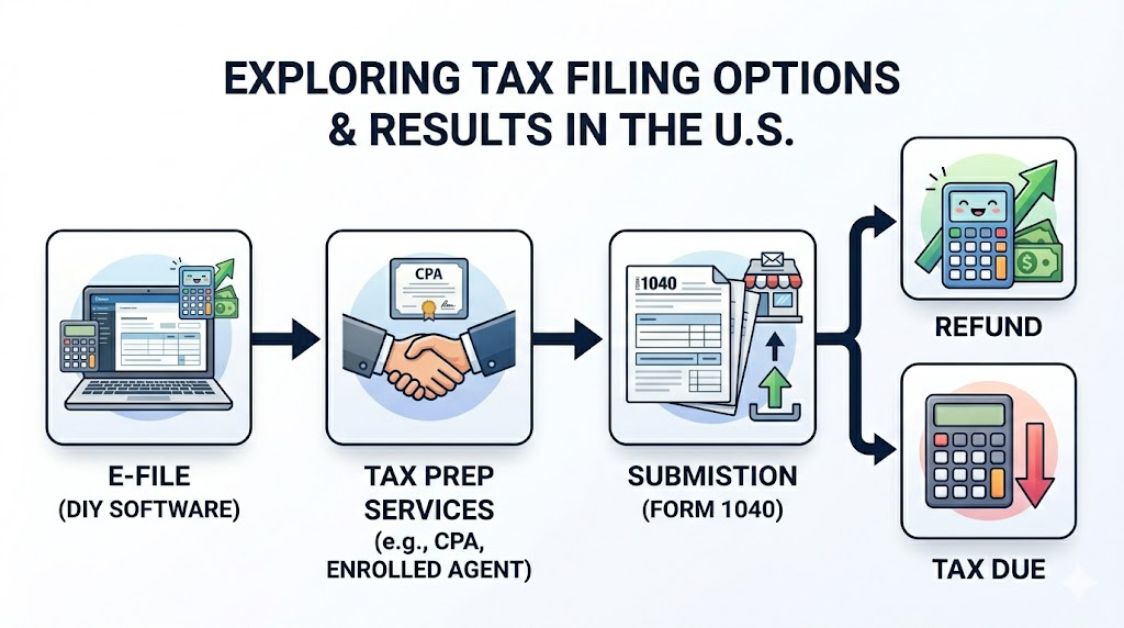
CPA vs DIY Filing Options Cost (Real Numbers for 2026)
The first time I checked tax filing prices, I felt shocked. I thought all tax filing cost the same, but the gap between DIY tools and a Certified Public Accountant (CPA) was wide. I compared options while preparing my own income tax return, and that moment changed how I view tax planning.
Short answer: cost depends on how complex your taxes are, not just the service you choose.
Most simple filers can use programs from the Internal Revenue Service at little or no cost. The IRS Free File option works well for basic W-2 income and standard deductions. I used it once during a simple year, and it felt like filling a guided checklist.
Takeaway: free or low-cost filing works best for simple finances.
DIY tax software usually costs less than hiring a professional. You pay a small fee, answer questions, and submit your return online. The process feels easy, but it stops at filing and offers limited long-term tax planning.
Quick answer: DIY filing saves money upfront but may miss deeper savings.
Hiring a CPA costs more, and I hesitated at first. Then I realized a CPA trained under standards from the American Institute of Certified Public Accountants looks beyond one tax year. My CPA found deductions I never noticed and helped with future tax compliance decisions.
Simple takeaway: higher CPA fees often pay back through smarter planning.
Performance differs between each filing option. DIY filing works fast for simple returns, while CPAs handle complex income, business earnings, or investments with care. Ease of use depends on how much time you want to spend learning tax rules yourself.
Answer-first insight: simple taxes favor DIY; complex finances favor a CPA.
Value for money became clear after a few tax seasons. In years with only one job, DIY filing made sense for me. During years with freelance income and deductions, professional help saved more than it cost.
Key takeaway: the best filing method changes as your financial life changes.
Many readers ask about CPA vs DIY filing options cost because they want certainty. My honest lesson is this: cheaper is not always better, and expensive is not always necessary. Match the method to your income type and risk level.
Short answer: choose based on complexity, not price alone.
If you are comparing Where to File Taxes in Orlando: CPA vs DIY Filing Options, start by asking one question: how confident do you feel handling tax rules alone? Confidence often predicts whether DIY filing feels simple or stressful.
Final takeaway: the right choice is the one that gives you accuracy, calm, and long-term tax confidence.
When Hiring a CPA in Orlando Makes Sense
Tax season can feel stressful. I once had a W-2 job, freelance work, and rental income all in the same year. I thought about using DIY software, but it felt risky. Hiring a Certified Public Accountant (CPA) in Orlando helped me stay on track.
Short answer: use a CPA if your finances are complex.
A CPA does more than fill forms. They check income, spot deductions, and plan for the future. For business owners or landlords, this can save money.
Takeaway: a CPA handles complex finances and keeps you safe from errors.
High-income earners or people with multiple jobs benefit most. My CPA found credits I missed and suggested moves to reduce next year’s taxes.
Short answer: CPAs combine compliance with smart tax planning.
Even if your taxes seem complicated for one year, a CPA simplifies it. They follow IRS rules and standards from the American Institute of Certified Public Accountants. This reduces audit risk.
Key takeaway: a CPA in Orlando gives peace of mind and protects your money.
When DIY Filing Is the Smarter Choice
Tax season always felt like a puzzle I had to solve on my own. In some years, my finances were simple—just W-2 income from a full-time job. I didn’t need a CPA to sort it all out. Using DIY filing tools like IRS Free File made sense. Short answer: DIY works best when your taxes are simple.
For students or first-time filers, DIY software can be a lifesaver. I remember my first year filing with Free File—it guided me step by step. I didn’t have to guess which forms to use or worry about missed deductions. Takeaway: guided software helps avoid mistakes without extra cost.
Even for regular employees using the standard deduction, DIY filing often covers everything you need. You answer plain questions, enter numbers from your W-2, and e-file directly with the Internal Revenue Service. The process is fast, and you can finish in a single afternoon. Quick tip: keep your forms and receipts handy to make it smoother.
DIY tools shine in speed, ease of use, and low cost. I like knowing I don’t pay extra when my taxes are simple. The trade-off is that they don’t offer deep tax planning or advice. Short answer: DIY saves money and works well for uncomplicated returns, but it won’t catch every long-term tax opportunity.
Even if you start DIY and realize your taxes are more complex, switching to a CPA in Orlando is always possible. That flexibility gave me peace of mind when my side income or rental property made things trickier. Takeaway: start simple, upgrade if needed.
Where to File Taxes in Orlando (Local Options Explained)
When I first searched where to file taxes in Orlando, I felt overwhelmed. There are CPA firms, tax offices, online tools, and hybrid options. Each has its strengths depending on your income type, experience, and comfort with numbers. Short answer: choose a filing method that fits your personal situation and financial complexity.
CPA Firms in Orlando
Local CPA firms provide personalized service and guidance. I once went to a small Orlando firm for my freelance income year, and they walked me through each step. They check income, spot deductions, and plan ahead. Takeaway: CPAs are ideal for business owners, landlords, or anyone with multiple income streams.
Many CPA offices in Orlando follow standards from the American Institute of Certified Public Accountants. This ensures your tax return meets IRS rules and lowers audit risk. Quick tip: ask about experience with your type of income before hiring.
Tax Offices
Orlando has plenty of traditional tax offices. Some focus on quick filing for W-2 employees, while others handle more complex cases. I used a local tax office once during my first move to Orlando—it was easy, but I realized they mostly focus on preparation, not planning. Short answer: tax offices are convenient for standard returns but may offer limited strategic advice.
Online Filing
Online filing is perfect if you want speed and control. I’ve used IRS Free File and other DIY software when my taxes were simple. The system guides you step by step, checks errors, and e-files directly with the Internal Revenue Service. Takeaway: online filing is fast, cost-effective, and works well for uncomplicated returns.
For Orlando residents, online tools also let you keep everything digital, which is handy if you move or travel. You don’t need a physical office nearby. Quick tip: save PDFs of all filings for your records—it avoids headaches if you need proof later.
Hybrid Options
Some Orlando services combine online tools with expert review. I tried one last year when I had a small rental property. I prepared the return online and a CPA reviewed it before submission. Short answer: hybrid options offer convenience plus professional backup.
Hybrid filing can save money compared to full CPA service while still catching potential errors or missed deductions. Takeaway: use hybrid filing if you want both control and safety.
CPA vs DIY Filing Options California vs Orlando (Regional Comparison)
Filing taxes in Orlando is much simpler than in California. The main reason is that Florida has no state income tax. You only handle federal taxes.
In California, your income is taxed at different rates. Deductions and credits can be confusing. I once helped a friend file California taxes. Even with software, it felt like a maze. In Orlando, filing is faster and easier.
Cost and effort also change by state. DIY software in California may need a paid version to handle state forms. In Florida, IRS Free File or basic software usually works fine. You still may hire a CPA in Orlando if you have complex income, rental properties, or multiple jobs. But the rules are simpler than in California.
Quick takeaway: Living in Florida usually makes filing easier and cheaper. Whether you choose DIY or a CPA still depends on your finances. But skipping state taxes makes a big difference.
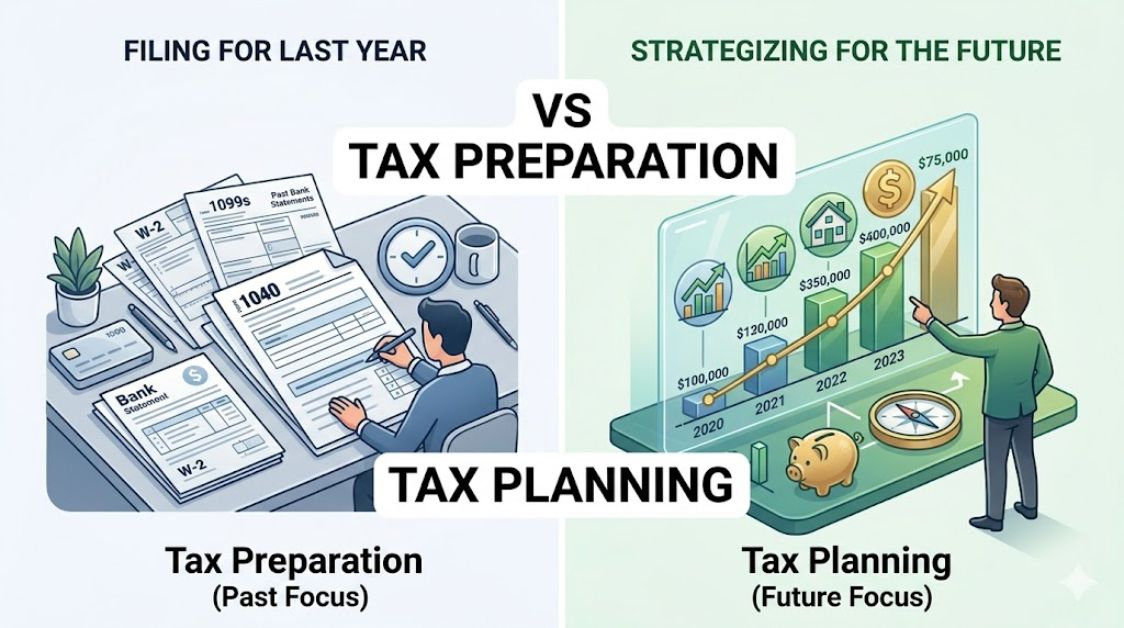
Tax Planning vs Tax Preparation — The Hidden Difference Most People Miss
When I first filed taxes, I thought “preparation” and “planning” were the same. I quickly learned they are not.
Tax preparation deals with the past. You collect W-2s, 1099s, and receipts. You fill forms and check your numbers. The goal is to follow Internal Revenue Service rules. Short answer: preparation handles what already happened.
Tax planning looks at the future. It finds ways to pay less legally next year. It guides decisions on deductions, investments, and retirement accounts. When I worked with a CPA in Orlando, I saw how planning can save money year after year. Short answer: planning protects your financial future.
DIY tools focus mostly on preparation. They guide you through forms and e-filing. CPAs mix preparation with planning. They spot credits or strategies you might miss alone. Takeaway: preparation keeps you safe; planning keeps you ahead.
Knowing this difference changed how I handle taxes. Now, I don’t just file. I plan. This keeps surprises low and savings high.
Common Tax Filing Mistakes I See People Make
Tax season can feel like a minefield. Over the years, I’ve noticed a few mistakes pop up again and again.
Wrong deductions. I once helped a friend who claimed home office deductions incorrectly. The IRS sent a notice, and it turned a simple return into a headache.
Short answer: claim only what you’re allowed to, and keep receipts.
Missing credits. Another time, a coworker overlooked the earned income tax credit. It could have added hundreds to her refund. Short answer: double-check every credit—you might be leaving money on the table.
Filing late. Procrastination is common. I used to wait until the last week of April and felt stressed every time. Missing deadlines can trigger penalties. Short answer: file early to avoid fees and stress.
DIY overconfidence. Many people trust software too much. I’ve seen someone accidentally enter business income as personal, which raised flags with the IRS. Short answer: even guided software can’t replace careful review.
The big takeaway: mistakes cost time, money, and peace of mind. Whether you choose a CPA in Orlando or DIY filing, paying attention to these common errors makes tax season much smoother.
Step-by-Step Decision Framework (Featured Snippet Target)
Tax season can feel overwhelming, but breaking it down makes the choice between DIY and a CPA simple. Here’s how I decide each year based on my own experience:
✔ Simple income → DIY
Short answer: if you only have W-2 income and take the standard deduction, IRS Free File or other DIY software is usually enough. When I first filed my taxes with just a full-time job, DIY software guided me step by step, and I finished in an afternoon. It saved me time and money without any stress.
✔ Investments or business income → CPA
Short answer: if you run a business, have rental properties, or multiple income streams, a Certified Public Accountant in Orlando can save you headaches and money. My CPA has spotted deductions I never knew existed, planned for next year, and ensured compliance with IRS rules, making the higher cost worth it.
✔ IRS issues → Professional help
Short answer: if you have past mistakes, audits, or complex IRS notices, professional guidance is critical. I once helped a friend with a notice from the IRS, and having an expert review everything prevented fines and simplified the process.
Takeaway: Start simple. Upgrade to professional help only when your taxes are complex, or risk is high. This framework keeps filing stress low and confidence high, whether you choose DIY tools or a CPA in Orlando.
Final Thoughts — How I Personally Decide Each Tax Season
Every year, I ask myself a few simple questions before deciding how to file my taxes in Orlando. Do I have only a W-2 job? Are there investments, side gigs, or rental properties? Have I run into IRS notices or confusing forms before? My answers guide whether I go DIY or hire a CPA.
Is it better to file your own taxes or a CPA?
It depends on your financial complexity. If you have a simple W-2 job, no investments, and take the standard deduction, filing your own taxes using IRS Free File or a trusted software often works fine. But if you have freelance income, investments, rental properties, or multiple income streams, a CPA can help you maximize deductions, plan ahead, and reduce audit risk.
Short answer: DIY for simple returns; CPA for complex finances.
What is the best DIY tax program?
It depends on what you need. For basic federal returns, IRS Free File is completely free and reliable. If you want step-by-step guidance with extra features, popular options include TurboTax, H&R Block’s online software, and TaxSlayer. I’ve used TurboTax for simple returns and liked how the guided questions kept me from making mistakes.
Short answer: IRS Free File for free/simple; TurboTax or H&R Block for guided DIY.
Is it better to use a CPA or a tax preparer?
A CPA is licensed, regulated, and trained under the American Institute of Certified Public Accountants standards, so they can handle complex tax situations, planning, and audits. A standard tax preparer can file forms correctly but may not provide strategic planning or full audit support.
Short answer: CPA for long-term planning and complex returns; tax preparer for simple filing help.
Is it better to use a CPA or H&R Block?
H&R Block is great for quick, guided preparation, and their in-person or online services can help with moderately complex returns. A CPA, however, offers customized planning, advice, and compliance oversight for more complicated finances. I personally use H&R Block for a straightforward W-2 year, but switch to a CPA when side income or rental property is involved.
Short answer: H&R Block for moderate/simple returns; CPA for complex finances and strategic planning.
Read More:
5 Reasons Orlando Small Businesses Hire Tax Professionals Instead of DIY